
Every business today, regardless of size or industry, generates a ton of documents. This can be invoicing, bills that are received, hiring, and you can name them in every process.
Now for a long time, this process had been done manually, and it was painfully inefficient. Moreover, it consumed a lot of time. Not to mention that it was error-prone!!
But over the last decade, automation has stepped in, and the shift has been significant. What used to take hours now takes seconds.
Hi, I am Jacky, the founder of APITemplate. It is an API to automate your document generation.
With my experience in this space, I know how document generation has shifted toward automation over the last decade. This was the reason to build APITemplate.
I also have other blogs on document automation.
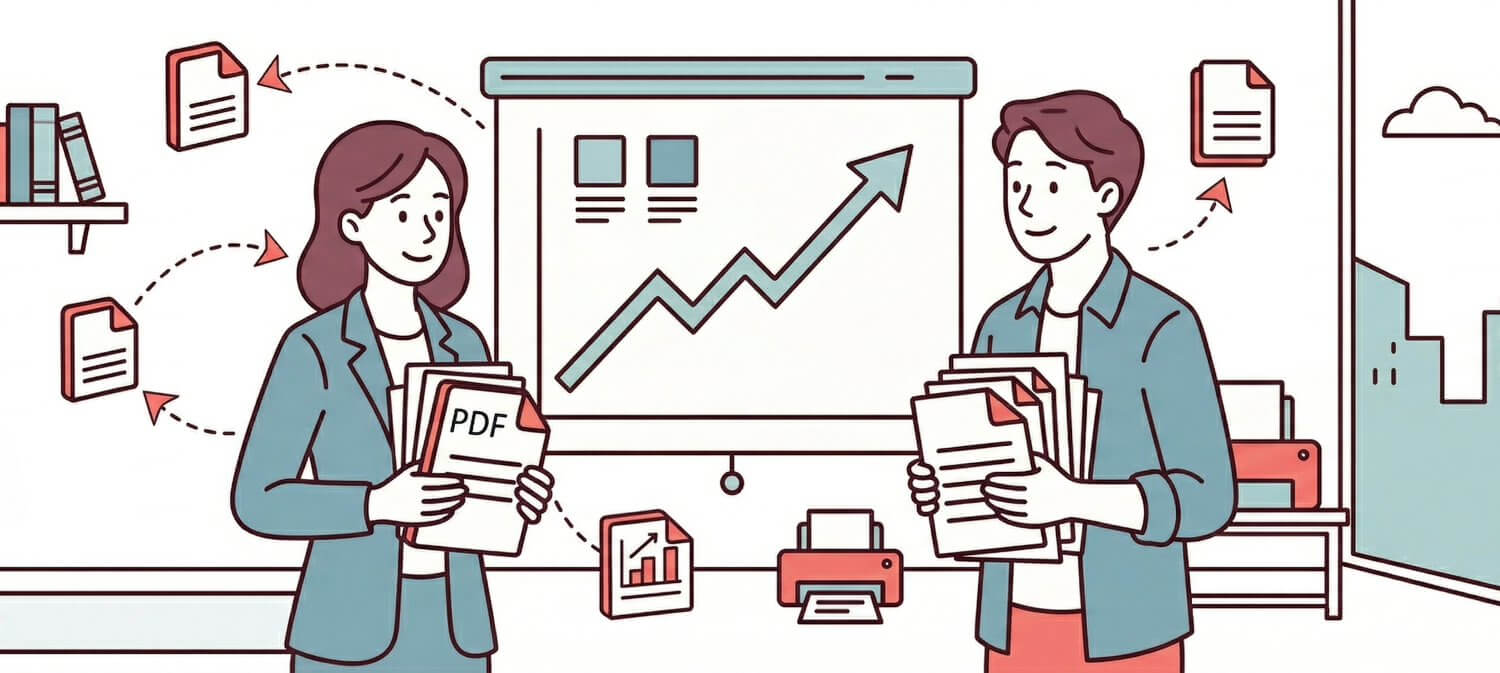
For this read, I have curated some stats & trends on PDF workflows, productivity gains, cost savings, and adoption patterns across industries.
Let’s get started.
Document Generation & Automation Software Market Size
The document generation software market isn’t a niche anymore.
It’s already a multi-billion-dollar industry growing at a pace that tells you exactly how seriously businesses are taking this.
Here are the numbers that prove it.
– The global Document Generation Software Market was valued at USD 4.05 billion in 2025 and is projected to reach USD 9.77 billion by 2035, growing at a CAGR of 9.2%.
Source: Global Growth Insights
– A second independent estimate puts the market at USD 3.62 billion in 2024, expected to reach USD 6.86 billion by 2031 at a CAGR of 9.21%.
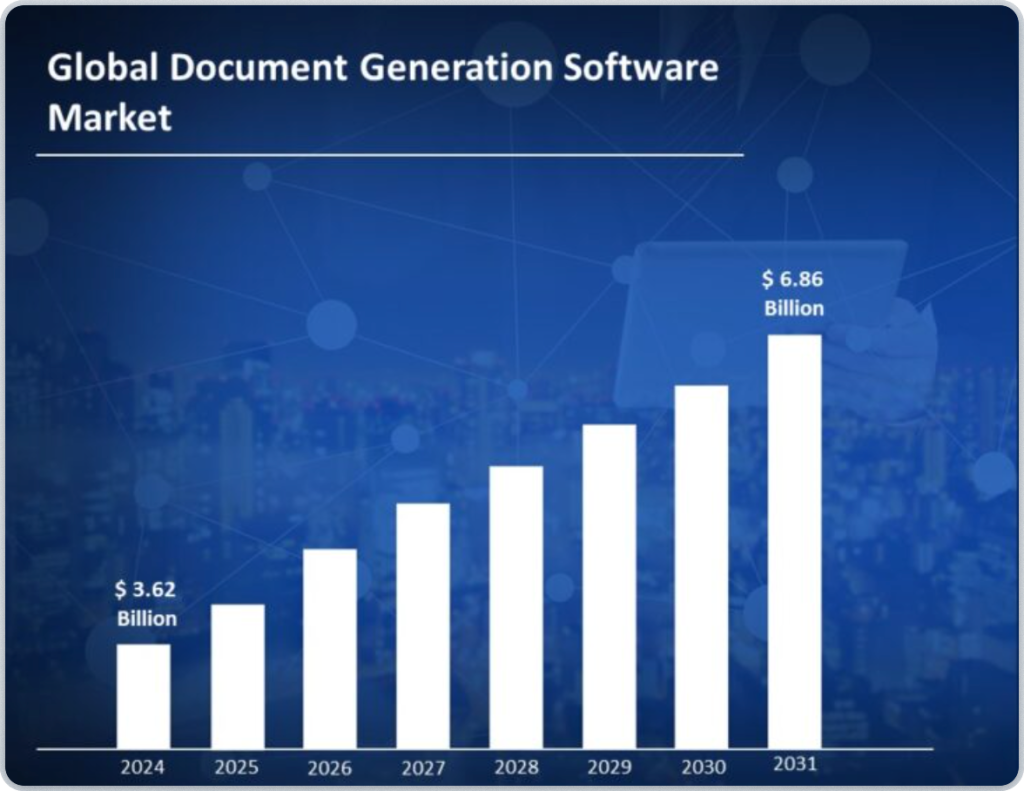
Source: Verified Market Research
– When you zoom out to the broader document generation and automation software market, the numbers get larger. It’s projected to grow from USD 15.7 billion in 2025 to USD 32.6 billion by 2031 at a CAGR of 13%.
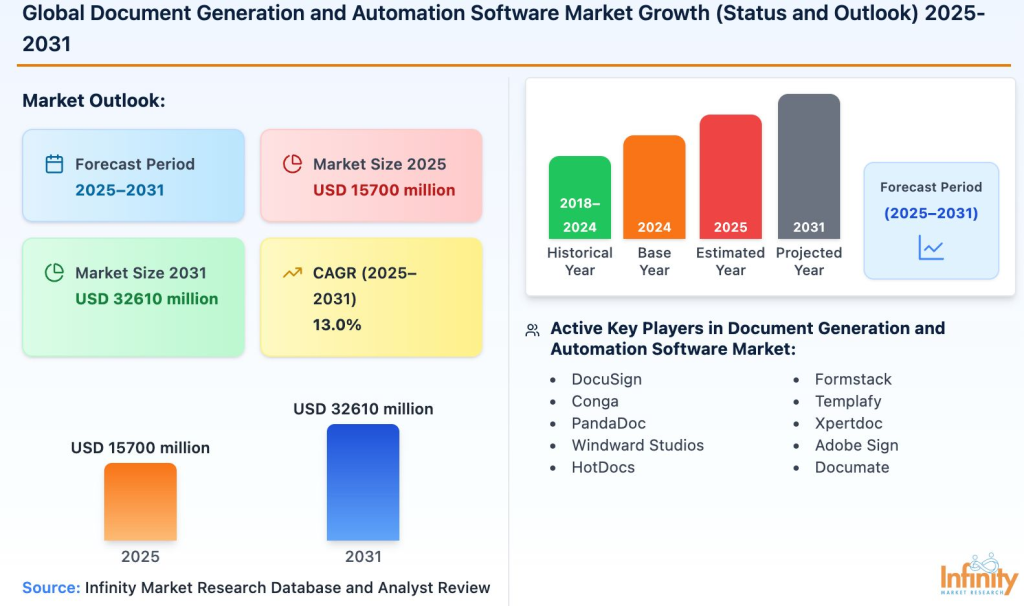
Source: Infinity Market Research
– The Document Automation Software Market specifically was valued at USD 7.86 billion in 2024 and is expected to hit USD 28.04 billion by 2033, growing at a CAGR of 15.18%.
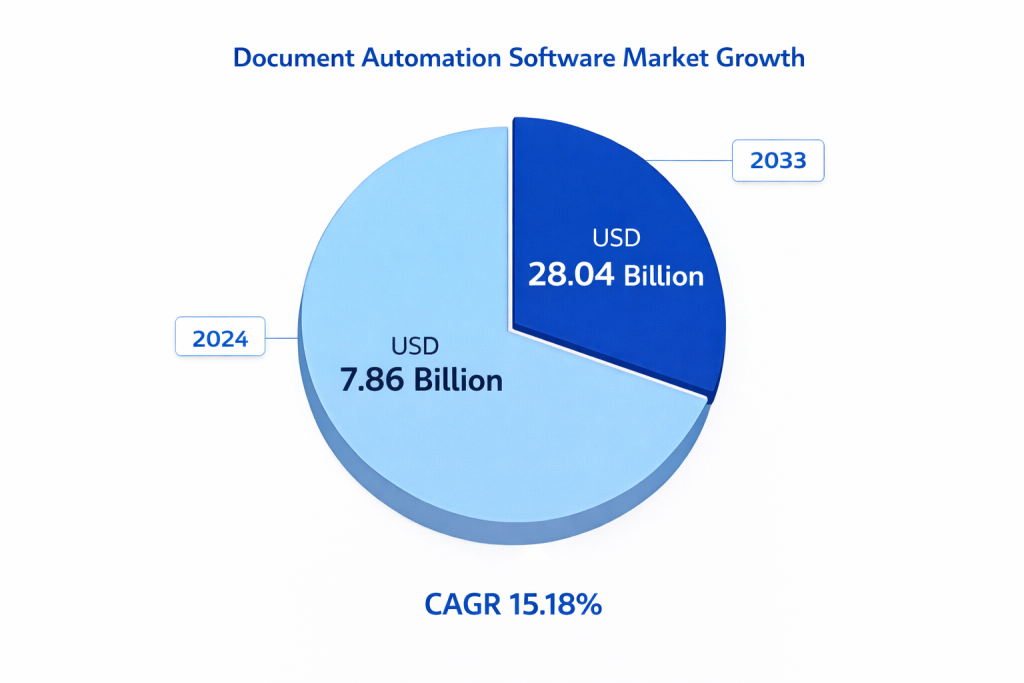
Source: Global Growth Insights
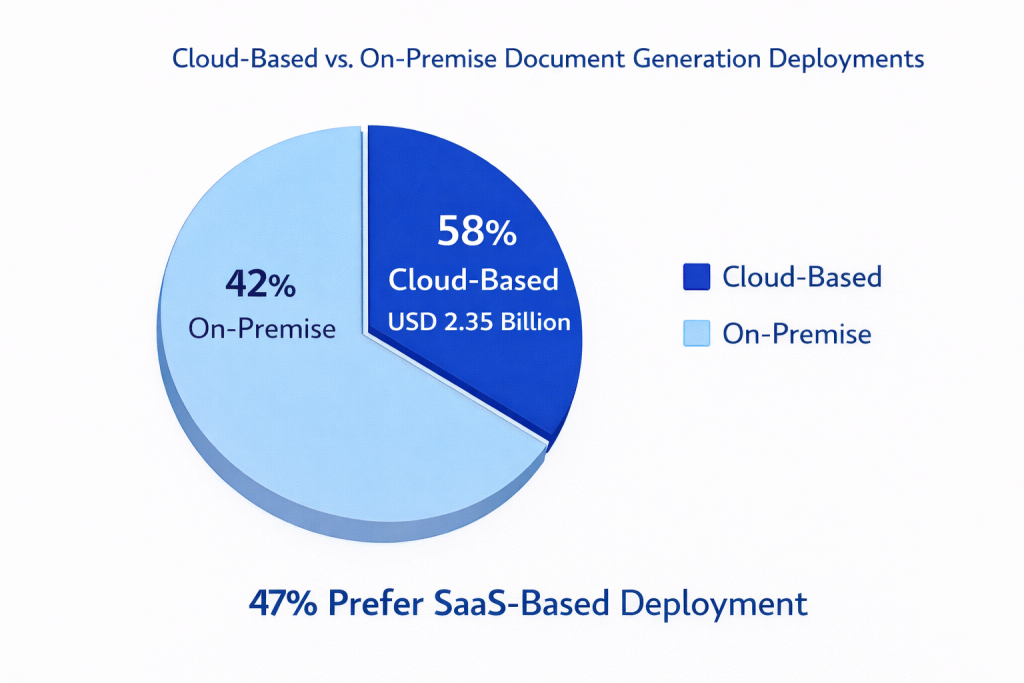
– Cloud-based document generation software already accounts for 58% of the total market, valued at USD 2.35 billion in 2025. Around 47% of enterprises prefer SaaS-based deployment over on-premise solutions.
Source: Global Growth Insights
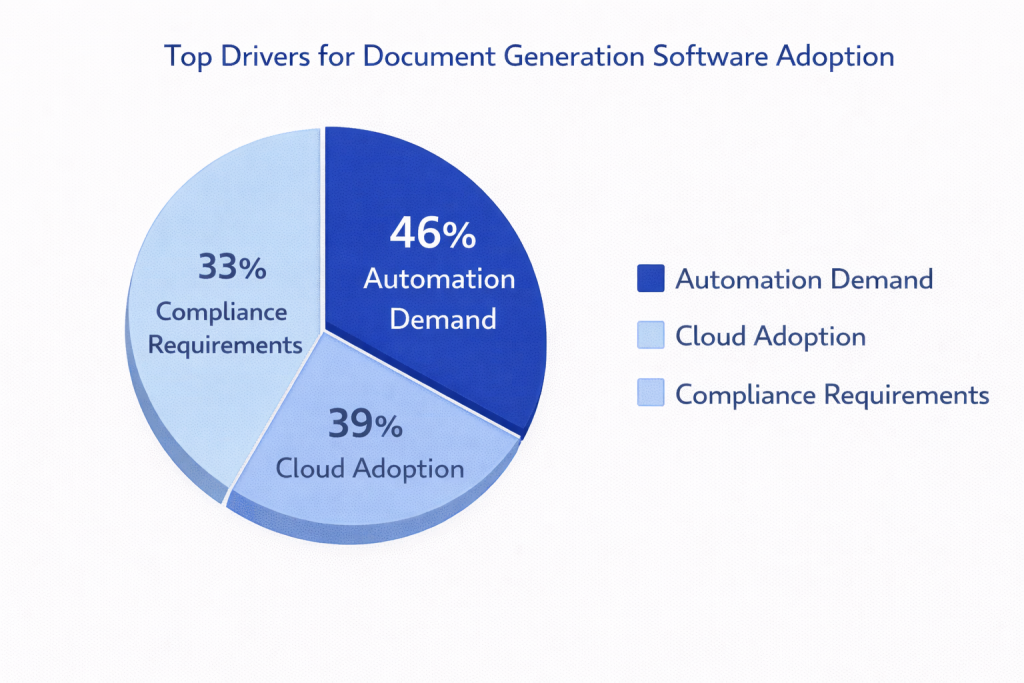
– The top three drivers pushing businesses toward document generation software adoption are automation demand (46%), cloud adoption (39%), and compliance requirements (33%).
Source: Global Growth Insights
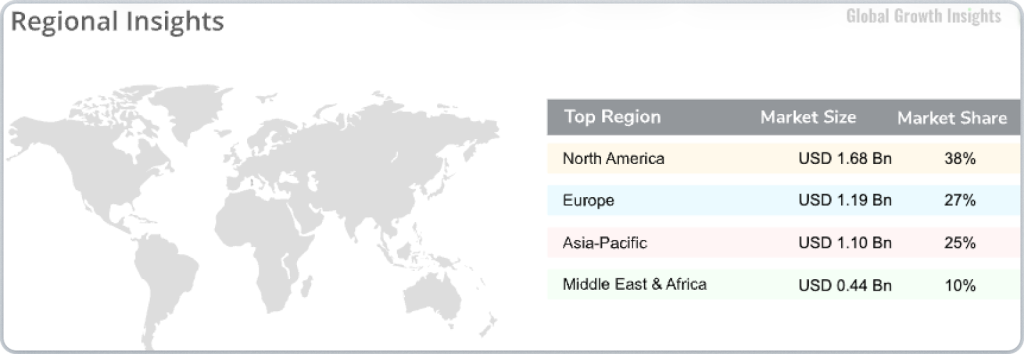
– Geographically, North America leads with 38% of the market. Asia-Pacific holds 25% and is the fastest-growing region, expanding at a CAGR of 14.4% through 2031.
Source: Global Growth Insights
PDF Is the Dominant Format for Business Documents
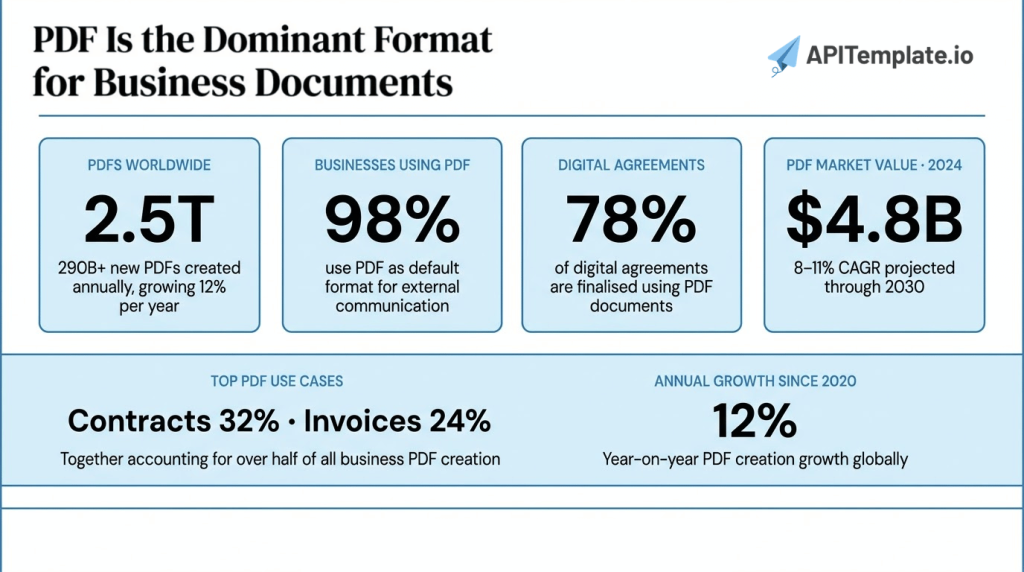
PDFs are becoming increasingly central to how businesses operate, communicate, and comply. Most business documents, from invoices and contracts to certificates and compliance reports, are generated and delivered as PDFs.
The scale of PDF usage globally makes a strong case for automating its generation. Check out the numbers.
– 98% of businesses use PDF as their default file type for external communication.
– Over 2.5 trillion PDFs exist worldwide, with 290+ billion new PDFs created annually, growing at 12% year-on-year.
– Contracts (32%) and invoices (24%) are the top two business uses of PDFs, together accounting for over half of all business PDF creation.
– 78% of digital agreements are now finalised using PDF documents.
– The PDF software market is valued at $4.8 billion in 2024, with 8–11% CAGR projected through 2030.
– PDF creation has grown 12% annually since 2020.
Source: Smallpdf
Template-Based & API-Driven Document Generation Stats
The way documents are actually built has shifted. Template-based PDF generation APIs have replaced manual creation at scale, and the adoption numbers reflect exactly how far that shift has gone.
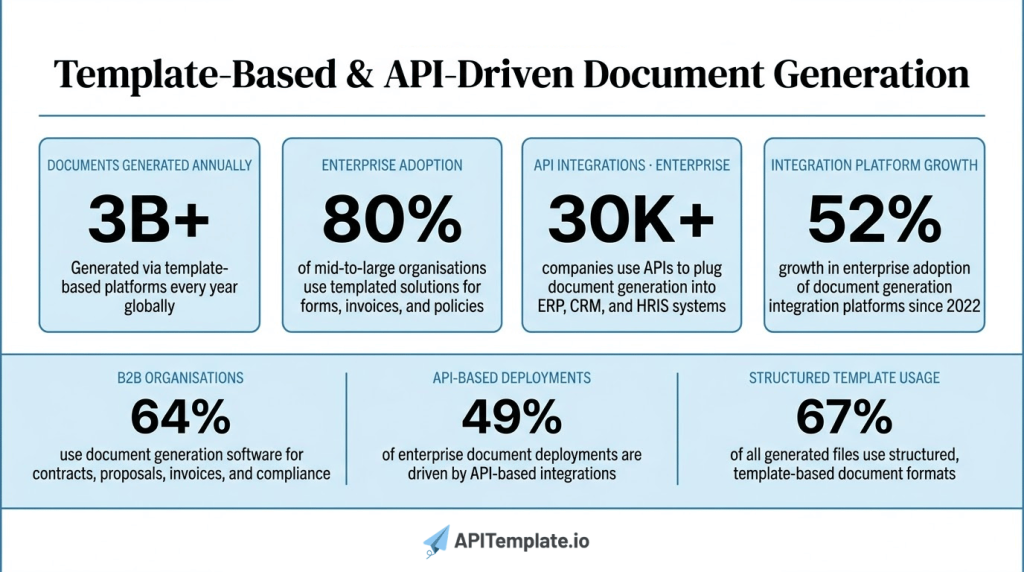
– Template-based platforms generate over 3 billion documents globally each year. 80% of mid-to-large organisations use templated solutions to produce forms, invoices, and policies.
– Over 4.2 billion documents are generated annually via automation platforms across legal, HR, and financial services.
– Integration platforms for document generation have grown 52% in enterprise adoption since 2022. Over 30,000 companies now use APIs to integrate document generation into ERP, CRM, and HRIS systems.
Source: MarketReportsWorld
– 64% of B2B organisations use document generation software for contracts, proposals, invoices, and compliance reporting.
– API-based document generation integrations contribute to 49% of enterprise deployments.
– Structured template-based document usage accounts for 67% of all generated files. Digital document volumes have increased 58% overall.
Source: MarketGrowthReports
Productivity & Time Savings from Automating Document Generation
The efficiency argument for document automation isn’t theoretical. The numbers from businesses that have actually made the switch tell a pretty clear story.
Here’s what the data shows.
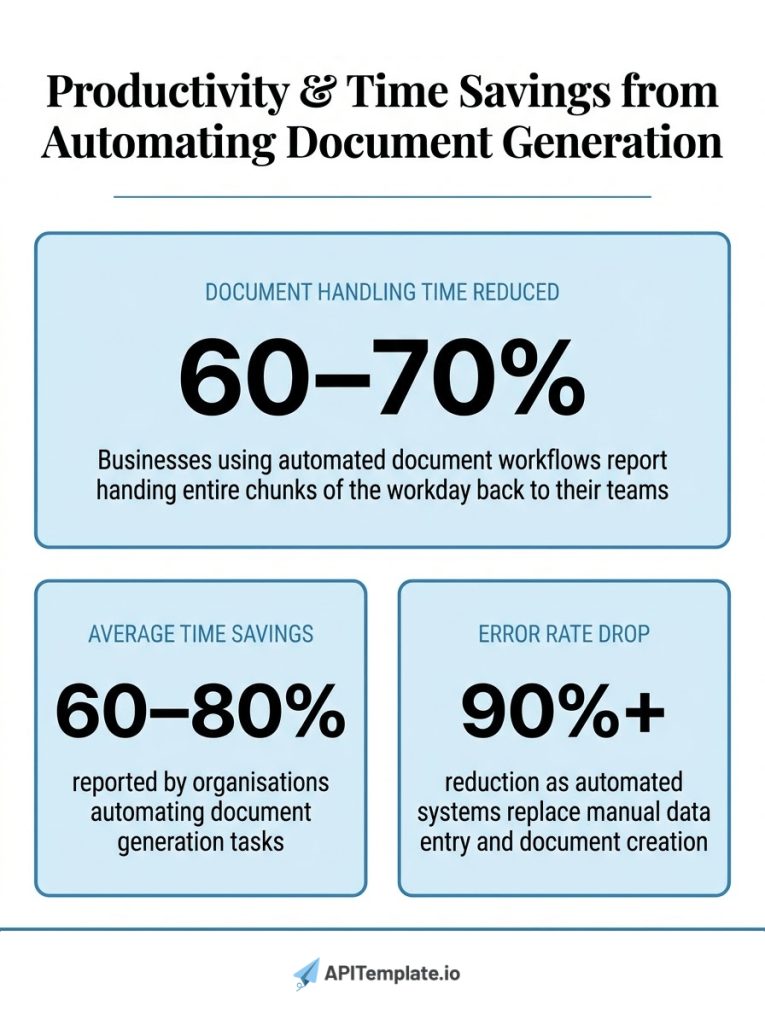
– Businesses using automated document workflows report reducing document handling time by 60–70%. That’s not a small efficiency gain. That’s entire chunks of the workday handed back to teams.
Source: Techling.ai
– Organizations report 60–80% average time savings by automating document generation tasks, with error rates typically dropping by 90% or more as automated systems replace manual data entry and document creation.
Source: EDocGen
Cost Savings from Document Generation Automation
The productivity gains are compelling enough. But the cost savings argument is what usually closes the deal internally.
Check out what businesses are actually saving when they make the switch.
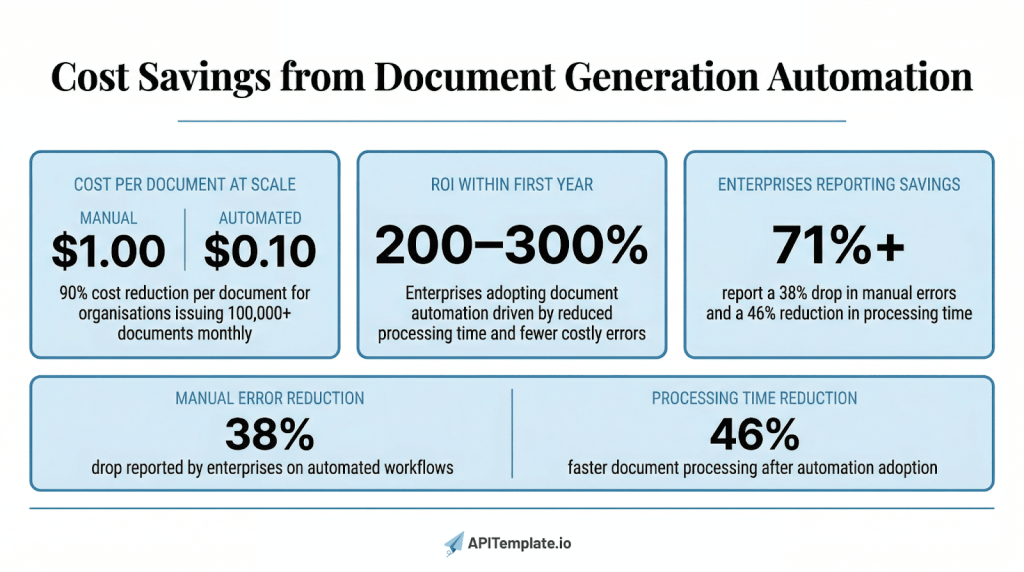
– For organizations issuing over 100,000 documents monthly, template-based document automation drives the cost of generating each document down to less than USD 0.10, compared to USD 1.00 with manual processing. That’s a 90% cost reduction per document at scale.
Source: MarketReportsWorld
– Enterprises adopting document automation often see 200–300% ROI within the first year, driven by reduced processing time and fewer costly errors.
Source: Techling.ai
– Over 71% of enterprises using automated document workflows report a 38% reduction in manual errors and a 46% reduction in processing time.
Source: MarketGrowthReports
Future Trends & AI’s Growing Role in Document Generation
The numbers from previous sections show where document automation is today. This section shows where it’s heading. And the trajectory is hard to ignore.
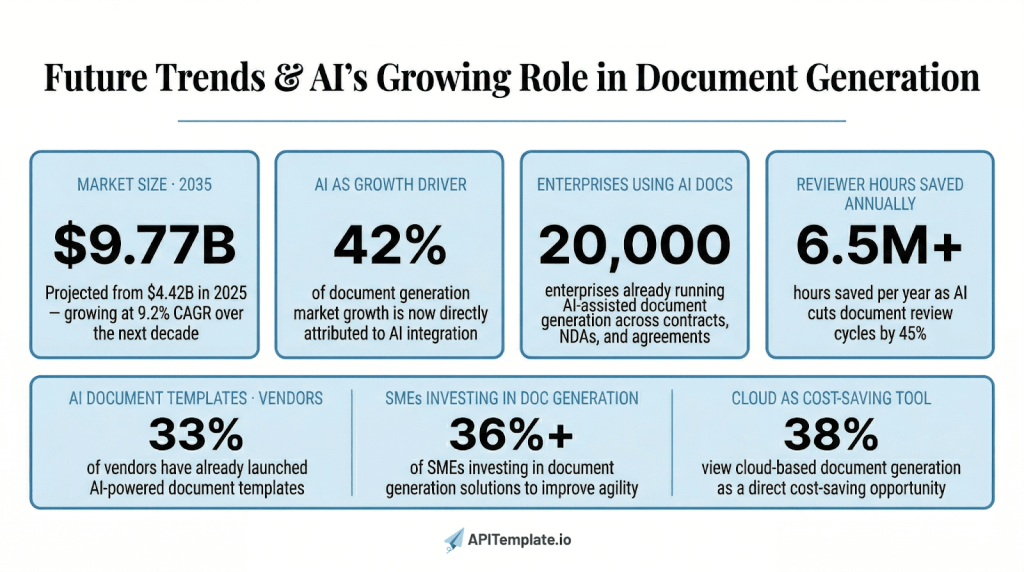
– The global document generation software market is projected to grow from USD 4.42 billion in 2025 to USD 9.77 billion by 2035, registering a CAGR of 9.2%. AI-powered workflows, cloud adoption, and compliance-driven demand are the primary forces behind that growth.
– AI integration is now the single biggest growth driver in the document generation software market, accounting for 42% of market growth. 33% of vendors have already rolled out AI-powered document templates, and 31% are actively building multilingual document automation features to support global operations.
More than 36% of SMEs are investing in document generation solutions to improve agility, and 38% view cloud-based document generation as a direct cost-saving opportunity.
Source: Global Growth Insights
– AI-assisted document generation is already deployed across 20,000 enterprises, processing over 120 million contracts, NDAs, and agreements annually, reducing review cycles by 45% and saving more than 6.5 million reviewer hours per year.
Source: MarketReportsWorld
Conclusion
Every statistic in this blog points to the same thing ⬇️
Document and PDF generation automation is growing, and it will continue to grow in the future. If you’re still doing it manually, you’re not just losing time but also losing accuracy, consistency, and the ability to scale.
If you are looking for a way out to generate documents automatically, that’s simple, effective, and scalable. APITemplate.io is worth using for all of your use cases, from invoice automation to report generation, certificates, contracts, and more.
The editor works just like a regular document. You can create your template from scratch using the visual editor, choose from existing pre-built templates and edit them with your own information, or build it using HTML and CSS.
Once your template is created, you can set your variables and automate it however you like using the API, either with no-code platforms like Zapier, Make.com, or n8n, or directly through code using Python, JavaScript, PHP, Java, or C#.
Each document will be generated with formatting and alignment in minutes.
To get started, Sign Up for APItemplated. For more information on how you can use it, I have listed a few resources below.
Additional Resources
- Automate PDF Reports using Make and APITemplate.io
- How to Generate PDF Documents with n8n and APITemplate.io
- A Complete Guide to the PDF Generation Process for Developers
- Convert HTML to PDF for eCommerce Receipts, Labels, and Invoices
- How Low/No-Code Solutions Are Transforming Document Generation for Businesses